
How Does Laser Smoking Cessation Work?

Updated: May 22

USAQSV Offer a Natural, Non-Invasive Way to Quit Smoking or Vaping
You are not weak because you smoke.
You are not broken because you vape.
You are not failing because you tried to quit before and went back.
Nicotine creates a powerful loop in the body, the mind, the emotions, and daily habits. That is why quitting can feel so hard, even when you truly want to stop.
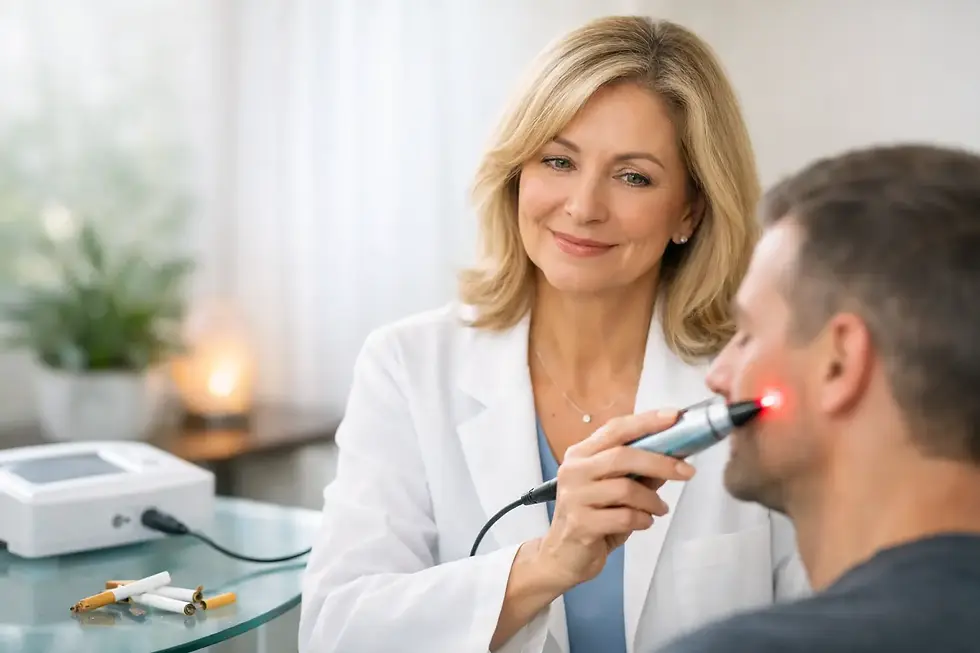
At USA Quit Smoking & Vaping, Julie Lavoie, BA, TTS, offers a natural, non-invasive smoking and vaping cessation session using auriculotherapy with LLLT cold laser therapy. This state-of-the-art cold laser approach is designed to support your body, calm cravings, reduce withdrawal discomfort, and help you step into your nicotine-free life with more confidence.
This is a holistic approach, not medical advice.
What Is Laser Smoking Cessation?
Laser smoking cessation uses a gentle, low-level cold laser on specific points of the ear and body. These points are selected to support the areas most connected to quitting nicotine, including:
Cravings
Stress response
Irritability
Emotional tension
Appetite control
Body detox support
Relaxation
Withdrawal discomfort
Habit interruption
The treatment is painless. There are no needles, no medication, no burning, and no cutting. Most people feel relaxed during the session. Some feel a light sensation, while others feel almost nothing during the laser application.
The goal is simple: help your body settle, reduce the intensity of cravings, and support you as you disconnect from cigarettes, vaping, or other nicotine habits.
Why the Ear Is So Important
The ear is used in auriculotherapy because it works like a reflex map of the body. Specific points on the ear are connected with different systems, including stress, cravings, appetite, and emotional balance.
During your session, Julie uses carefully selected points to support your personal quitting pattern. This is not a one-size-fits-all approach.
If you smoke when you are stressed, your session must support stress regulation.
If you vape all day, your session must support constant habit interruption.
If you fear weight gain, appetite control points are included.
If your body feels heavy, tired, or overloaded, body detox support points are included.
If your cravings are emotional, your session must support the nervous system and the mind.
Your nicotine habit is personal. Your quit session should be personal too.
What Happens During Your Session?
Your appointment begins with understanding you.
Julie reviews your smoking or vaping pattern, your triggers, your past quit attempts, your stress level, and what usually pulls you back into nicotine. This matters because your body may be addicted to nicotine, but your daily life is also addicted to the routine.
Then the cold laser is applied to specific auriculotherapy points, including points for cravings, relaxation, appetite control, and body detox support.
The session also includes quit coaching so you do not leave confused, afraid, or unprepared.
You leave fully prepared physically and mentally to embrace your nicotine-free life.
That means you understand what to do after the session, how to protect your first hours and days, how to respond to triggers, and how to stop negotiating with “just one puff.”
Why Coaching Matters
The laser helps support the body.
The coaching helps prepare the mind.
Together, they create a stronger quit experience.
Many people relapse because they are physically ready for change but mentally unprepared for the first stressful moment. This is why Julie’s approach includes both cold laser support and practical quit coaching.
You are not just receiving a treatment. You are creating a clean break.
You are choosing a new identity.
You are stepping away from the old loop.
You are giving your body a chance to reset.
You are learning how to live without reaching for nicotine.
How Quickly Can You Feel a Difference?
Many people feel calmer the same day. Some notice that cravings feel weaker. Others realize the difference when they face a familiar trigger and do not feel the same intense pull.
Every person is different, but the goal is to make quitting feel more manageable, more supported, and less overwhelming.
Laser smoking cessation does not erase your life habits magically. You still need commitment. You still need to protect your decision. But when your body feels calmer and your mind is prepared, quitting can feel completely different.
What Makes This Approach Different?
At USA Quit Smoking & Vaping, the session is designed to support the whole quitting experience.
This includes:
LLLT cold laser therapy
Auriculotherapy
Craving support points
Appetite control points
Body detox support points
Stress and relaxation points
Quit coaching
Trigger awareness
Nicotine-free preparation
Practical first-day guidance
This is a natural, non-invasive, holistic approach for people who are ready to stop smoking or vaping and want help doing it with more calm, clarity, and confidence.
How Much Is the Session?
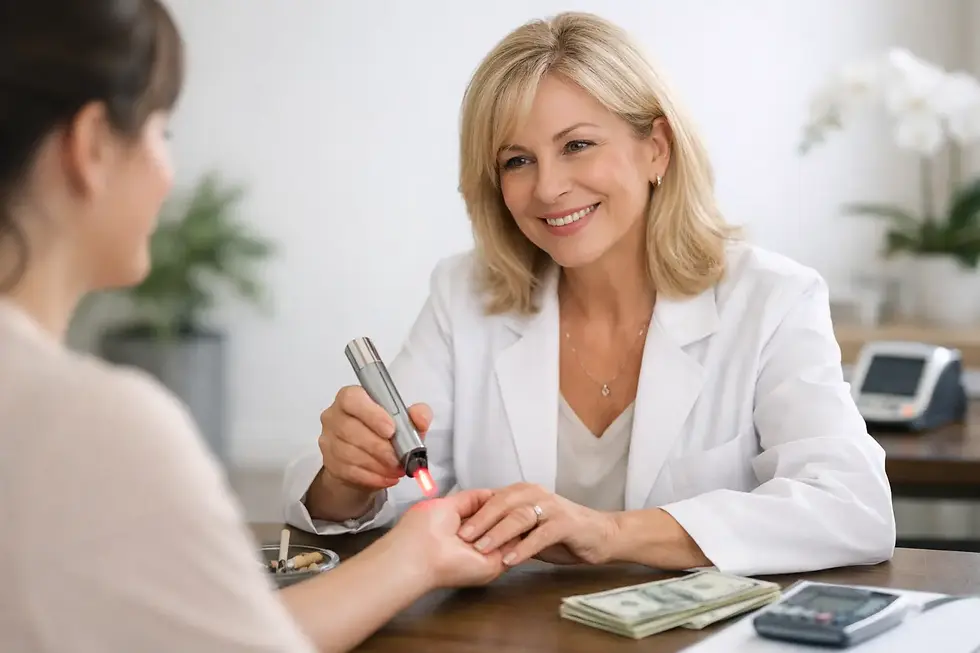
Your complete laser smoking and vaping cessation session is only $250.
This includes your consultation, auriculotherapy cold laser session, appetite control support, body detox support points, and coaching preparation to help you step into your nicotine-free life.
Are You Ready to Be Done?
You do not have to keep waiting for the perfect day.
You do not have to keep saying, “I’ll quit soon.”
You do not have to keep proving your willpower by suffering alone.
If you are ready to stop smoking or vaping, this may be the support your body and mind have been waiting for.
Your nicotine-free life can begin with one clear decision. Choose a quitting date and call us.
Contact Information
Julie Lavoie, BA, TTS
USA Quit Smoking & Vaping
Smoking & Vaping Cessation Support
Auriculotherapy • LLLT Cold Laser Therapy • Quit Coaching
📞 Phone: (561) 601-2128
🌐 Website: www.usaquitsmoking.com
📍 West Palm Beach, Florida
#LaserSmokingCessation #QuitSmokingNaturally #QuitVapingNaturally #ColdLaserTherapy #LLLT #Auriculotherapy #NicotineFreeLife #StopSmokingSupport #VapingCessation #QuitNicotine #USAQuitSmoking #USAQuitSmokingAndVaping #JulieLavoie #WestPalmBeach #SmokeFreeLife #VapeFreeLife #NaturalSmokingCessation #AppetiteControl #BodyDetoxSupport #HolisticQuitCoach
Comments